City squares articles
Pioneers in establishing companies in Egypt
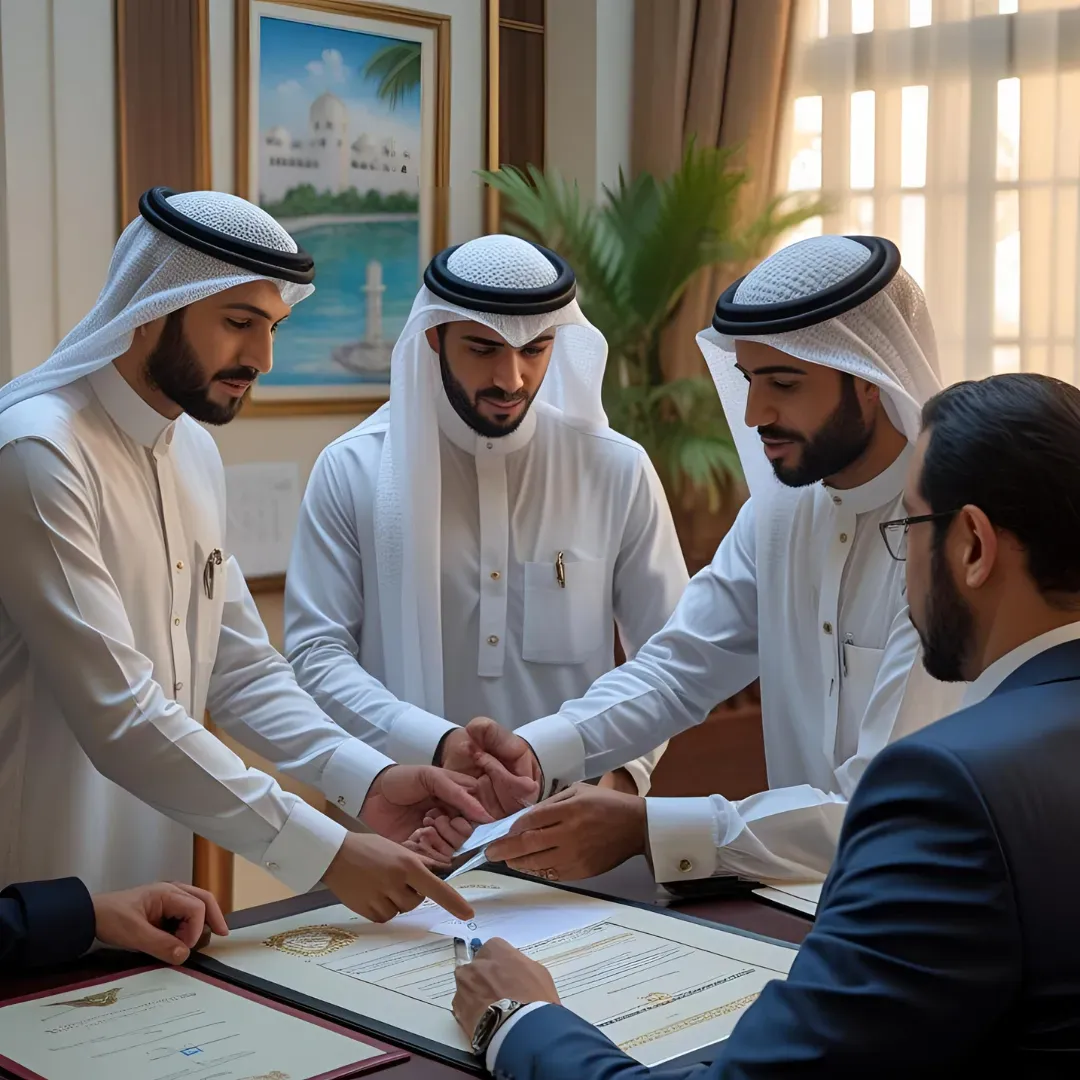
Founding Contract Attestation Services by the Saudi Embassy in Muscat

Founding Contract Attestation by the Saudi Embassy in Muscat
If your Omani company plans to work in Saudi Arabia, the Saudi authorities will want to see your founding contract, and they will want proof that it is genuine. That proof is attestation. It is a chain of official stamps that confirms your articles of association were issued by the right bodies in Oman, and that the signatures on them are real. Without it, a Saudi ministry, bank, or partner can simply refuse the document. This guide explains why the attestation matters, who has to stamp the paper, what to prepare, and what the process looks like from the notary in Muscat to the final embassy seal.
What founding contract attestation means
A founding contract, also called the articles of association, is the document that sets up your company. It names the partners, sets the capital, and defines how the business is run. Attestation does not change the contract. It adds a set of official confirmations on top of it. Each authority in the chain checks the stamp of the one before it, then adds its own. By the time the Saudi Embassy in Muscat places the last seal, the document carries an unbroken trail that Saudi offices recognise. In short, attestation turns a valid Omani document into one that Saudi Arabia will accept as valid too.
The articles of association are one of several corporate papers that can travel this route. The embassy runs the same kind of check when it handles official document attestation for the Saudi Embassy, so the logic here applies to more than the articles of association alone.
Why Saudi business needs an attested founding contract
Saudi Arabia treats foreign corporate documents as unofficial until they are attested through its own embassy. That single rule sits behind several common needs.
Setting up a presence. If you want to open a branch or subsidiary of your Omani company in Saudi Arabia, the Saudi registrar asks for the attested contract as part of the file.
Signing with Saudi partners. Contracts, partnerships, and joint ventures with Saudi companies often require the attested articles, so the other side can confirm who controls your business.
Dealing with government. Saudi government and commercial bodies give the document legal weight only once the embassy seal is on it.
Banking. Opening a corporate bank account and running financial transactions in the Kingdom usually depends on an attested copy being on file.
The authority chain, from notary to embassy
Attestation follows a fixed order. You cannot skip a step, because each body only stamps a document that already carries the stamp before it. The chain runs entirely inside Oman until the final stage.
It starts with a Notary Public, who notarises the founding contract. Next the Ministry of Commerce, Industry and Investment Promotion certifies it. Then the Oman Chamber of Commerce and Industry adds its certification. After that the Omani Ministry of Foreign Affairs confirms the earlier stamps. Only then does the file move to the Saudi Embassy in Muscat for the final authentication.
Think of it as a relay. The embassy will not look at a contract that the Omani Ministry of Foreign Affairs has not already endorsed, and the ministry will not endorse one that the Chamber and the Ministry of Commerce have not handled first. Get the sequence wrong and the file comes straight back.
Documents you need to prepare
Getting the paperwork right at the start saves the most time. Prepare these before you begin.
The original founding contract. Attestation works on the original articles of association, not a plain photocopy.
A certified copy of the commercial register. This should be recent. The register and the founding contract are checked together, and a separate commercial registration authentication at the Saudi Embassy is often needed alongside it.
The Chamber of Commerce membership certificate. This confirms the company is a current member in good standing.
Partners' identity documents. Copies of the partners' passports or ID cards.
An authorisation letter. If a service office submits on your behalf, you will need an official letter authorising it to act for you.
The process, step by step
With the documents ready, the work splits into two stages.
Stage one, inside Oman. The contract is notarised, then passed through the Ministry of Commerce, the Oman Chamber of Commerce and Industry, and the Omani Ministry of Foreign Affairs in that order. Each office adds its certification before the next one will act.
Stage two, at the Saudi Embassy. You submit the attested documents to the Saudi Embassy in Muscat. The embassy reviews the Omani attestations to confirm the chain is complete, you pay the embassy fee, and the embassy places its final authentication stamp. That stamp is what makes the contract usable in Saudi Arabia.
Fees and timeframes
Costs fall into three groups, and none is fixed enough to quote a single reliable figure.
Omani government fees are nominal charges from the Ministry of Commerce, the Chamber, and the Ministry of Foreign Affairs.
Saudi Embassy fees cover the authentication service itself. These are set by the embassy and can change, so confirm the current amount before you submit.
Service office fees apply only if you hire someone to run the chain for you.
Because published rates move over time, treat any number you find online as a guide only, and confirm the live fees with the relevant office. A trustworthy provider will give you a full breakdown of expected costs before starting any work.
Timeframes work the same way. There is no fixed turnaround. How long the whole chain takes depends on the workload of each Omani authority and of the embassy at the time you apply. Preparing complete, correct documents up front is the main thing within your control.
Frequently asked questions
Do I attest the original founding contract or a copy? The process works on the original articles of association. A recent certified copy of the commercial register goes with it, but the contract itself should be the original.
Can I go straight to the Saudi Embassy? No. The embassy only stamps a document that already carries the Omani stamps, ending with the Omani Ministry of Foreign Affairs. Skip a step and the embassy will turn the file away.
How much does the attestation cost? There is no single fixed price. You pay small Omani government fees, the Saudi Embassy authentication fee, and any service fee. Embassy fees can change, so confirm the current amount before you submit.
How long does it take? It varies with how busy each authority and the embassy are when you apply. No office guarantees a set turnaround, so start early if you have a deadline in Saudi Arabia.
Do all the partners need to attend? Copies of the partners' passports or ID cards are part of the file. If a service office acts for you under an authorisation letter, it can submit without every partner attending in person.
How City Squares can help
Running a founding contract through four Omani authorities and then the embassy takes time, and one missing stamp sends the whole file back to the start. City Squares handles the full chain for you. We prepare the documents, move them through each office in the right order, and submit them for the final seal as part of our Saudi Embassy services in Muscat. If you are still setting up the business, our company formation service in Oman produces the contract you will later attest, so both steps stay under one roof.
Before we start, we give you a clear statement of the expected fees, so there are no surprises later. To begin, or simply to ask what your case needs, contact City Squares on WhatsApp and we will walk you through the next step.