City squares articles
Pioneers in establishing companies in Egypt
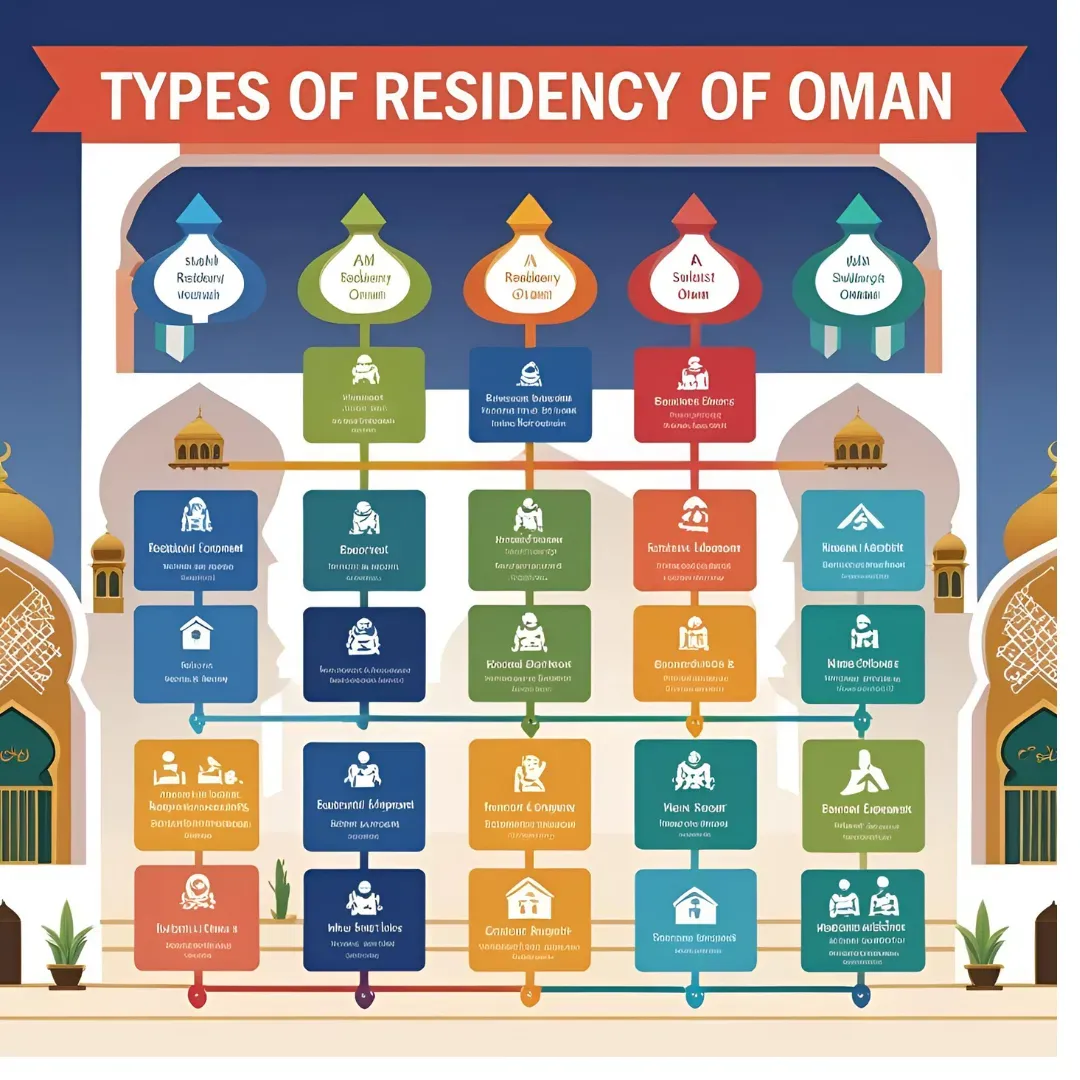
Types of residency in Oman

Types of Residency in Oman
Living in Oman for the long term starts with the right residency permit. Whether you come to work, invest, join family, buy a home, or retire, each route has its own sponsor, rules, and paperwork. This guide walks through the main types of residency in Oman, explains who each one suits, and sets out the practical steps to get and renew them. Most residency matters are handled by the General Directorate of Passports and Residence, part of the Royal Oman Police, working alongside the ministry that oversees your reason for staying.
Work and employment residency
Work residency is the most common route for expatriates. It begins with a job offer from an Omani company. The employer sponsors the permit and usually handles most of the process on the employee's behalf, including approval from the Ministry of Labour.
You will typically need a passport valid for at least six months, passport photos, your education and experience certificates, a medical examination at an accredited health centre, and a criminal record clearance or good conduct certificate. A work permit is valid for two years and can be renewed. Processing usually takes from two weeks to two months.
This route suits skilled professionals with a confirmed employer. Once settled, a working resident can sponsor close family under a separate permit. Keep your medical and clearance documents current, since they are checked again when the permit comes up for renewal.
Family and dependent residency
Family residency lets a spouse and minor children join a resident who already holds a valid work permit. The sponsor must show a steady monthly income, generally in the range of about 300 to 600 Omani rials depending on family size and circumstances.
Expect to provide proof of kinship, such as marriage and birth certificates, and a medical examination for each family member. One point catches many families out: a dependent cannot take a job on this permit. To work, a family member needs their own separate work permit. This route suits families who want to live together while one member holds a stable job in the Sultanate.
Investor residency, the long-term route
Investor residency is designed for foreigners who set up or invest in a business in Oman. You provide a clear business plan and obtain approval from the Ministry of Commerce, Industry and Investment Promotion, or from the Special Economic Zone Authority in Duqm for projects based there. A minimum investment applies, and the exact amount varies by activity and zone.
Investor permits run for five years or more, well beyond the two-year work permit. That longer validity is why this route serves as Oman's long-term, or golden, residency for people who back the local economy. The permit stays renewable while the investment remains active. It suits business owners and serious investors who want stability and the option to sponsor their family. If you are weighing the numbers, our guide to the minimum investment for an Oman golden visa sets out what to expect.
Real estate residency
Buying qualifying property can grant residency without running a business. The property must sit within an Integrated Tourism Complex, known as an ITC, or another area open to foreign ownership. It also has to meet a minimum value, which varies by project. Your title deed proves ownership and supports the permit application.
The permit is tied to the property, so it stays valid while you continue to own the home, and renewal generally rests on keeping that ownership in place. This route suits buyers who want a home in Oman together with the right to reside, rather than an employer or a company to sponsor them. For the detail, see our overview of real estate residency in Oman.
Retirement, student, and freelancer routes
Retirement residency. This is for foreign retirees who meet a minimum age and can show steady income from pensions or investments, backed by comprehensive health insurance. Buying or renting a home is optional but helps demonstrate settled means. It suits retirees who want a calm, low-cost base in the Gulf, and renewal usually rests on showing that the income and insurance remain in place.
Student residency. This covers international students accepted into an educational institution recognised in Oman. You will need proof that you can support yourself and valid health insurance for the study period.
Freelancer residency. Aimed at independent professionals with skills in demand, this route asks for a portfolio, proof of enough self-employment income, and health cover. It is still being developed, so terms may change as the framework matures.
A tourist visa is not residency and does not allow you to work. In some cases it can be converted once you qualify for a longer stay. Our guide on how a tourist visa can become a residence permit in Oman explains when that is possible.
Documents, timelines, and renewal
Most routes share a core set of documents: a valid passport, passport photos, a no objection certificate where required, a health certificate, a good conduct certificate, and proof of address such as a lease or title deed. A medical examination is standard across the main permit types.
Timelines differ by route. Work residency usually clears in two weeks to two months, while investor residency is issued for five years or more. Renew any permit before it expires. Do not exceed the time allowed outside the Sultanate, as long absences can put your status at risk. You can often switch from one type to another if you meet the new conditions. A common example is moving from a work permit to investor residency after starting a company.
Government fees are set in Omani rials and vary by permit type and duration. Because official charges are updated from time to time, confirm the current amounts on the Royal Oman Police residency portal or with the relevant ministry before you budget.
Frequently asked questions
Which residency is most common in Oman? Work residency. Most expatriates arrive on a job offer, and the employer sponsors and processes the two-year work permit.
Can my family live with me in Oman? Yes. A resident with a valid work permit can sponsor a spouse and minor children through family residency, provided they show a steady monthly income, generally around 300 to 600 Omani rials depending on circumstances.
How long does investor residency last? Investor permits are issued for five years or more, longer than the standard two-year work permit, and they remain renewable while the investment stays active.
Can I get residency by buying property? Yes. Property in an ITC or another designated area, above the minimum value for that project, can support a real estate residency permit through your title deed.
Can a dependent work on family residency? No. A dependent must obtain their own work permit before taking a job, even while living in Oman under family residency.
How City Squares can help
Choosing among the types of residency in Oman is easier with someone who handles the paperwork every day. City Squares guides you to the right route for your situation, prepares your documents, and follows the file through the ministries and the passports directorate so nothing stalls.
If your plan involves a business, we can set it up and manage the residency that follows through our company formation services in Oman and our post-company-formation services, which cover labour clearances, permits, and renewals. Tell us your goal and we will map the fastest, cleanest path to a permit.
Ready to start? Message City Squares on WhatsApp and we will walk you through the residency route that fits you.